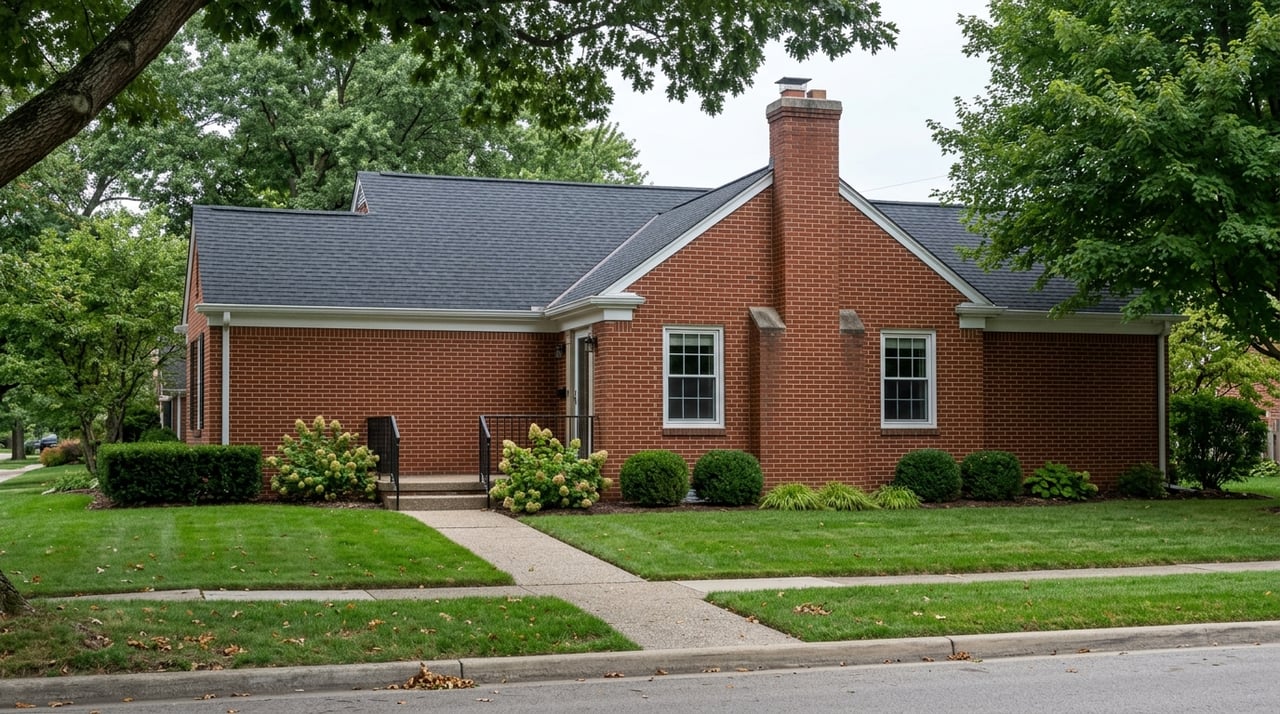
If you have ever looked at a Hinsdale property and wondered, “Am I paying for the house, the land, or both?” you are asking the right question. In a high-price market, that distinction can shape how you buy, sell, renovate, or hold a property. Understanding how lot value and home value work in Hinsdale can help you make smarter decisions and avoid overpaying for the wrong thing. Let’s dive in.
Why this matters in Hinsdale
Hinsdale sits in the upper tier of suburban Chicago pricing, which makes the land-versus-structure question especially important. Recent market data shows a median sale price of about $1.159 million for the three months ending April 2026, while Zillow’s average home value measure was $1,246,342 as of April 30, 2026.
Those numbers are not the same metric, but they point to the same reality. In Hinsdale, both the quality of the lot and the quality of the home can add major value. That is why two homes with similar square footage can carry very different prices depending on the site.
Lot value vs home value
In simple terms, lot value is what the land contributes to the property’s worth. Home value is what the structure and improvements contribute, including the house itself, updates, layout, and overall condition.
A property’s total value is usually some combination of both. In some cases, the home is the main driver. In others, the lot becomes so desirable that the existing house matters less than what could happen on the site in the future.
How appraisers think about it
One key appraisal concept is highest and best use. That means the reasonably probable and legal use of a property that is physically possible, legally permissible, financially feasible, and results in the highest value.
That matters in Hinsdale because not every property should be judged only by what is standing there today. Sometimes the current home is the best use. Sometimes the better question is whether the parcel supports a major renovation or even a future rebuild.
What public records can tell you
DuPage County assessment records separate land assessment, building assessment, and total assessment. Illinois property tax guidance says most real property is assessed at 33 1/3 percent of market value.
That said, assessor records are a tax tool, not a direct prediction of what a buyer will pay. They can still be useful because they show how local records split value between the site and the structure.
Important caution on assessments
It helps to treat assessments as a clue, not a final answer. A tax record may suggest whether a parcel has a stronger land component or a stronger improvement component, but market value depends on real buyer demand, property condition, and what is legally possible on that lot.
In other words, assessor data can support your analysis, but it should not replace a full pricing review. That is especially true in a village like Hinsdale, where redevelopment interest can change the math quickly.
Hinsdale zoning shapes value
In Hinsdale, lot size and zoning can strongly influence whether a property is more of a renovation candidate or a redevelopment candidate. The village’s single-family zoning table sets minimum lot areas at:
- 30,000 square feet in R-1
- 20,000 square feet in R-2
- 15,000 square feet in R-3
- 10,000 square feet in R-4
Minimum interior-lot widths are 125 feet in R-1, 100 feet in R-2, and 70 feet in both R-3 and R-4. Maximum lot coverage is capped at 50% in each district.
These rules matter because a parcel’s size and shape affect what you can reasonably do with it. If the lot has favorable dimensions and zoning flexibility, the land may carry a stronger share of the value. If the site is more limited, the condition and competitiveness of the existing home may matter more.
Permits and review can affect redevelopment
Not every teardown or major remodel is simple. In some parts of Hinsdale, extra review applies.
Within the Design Review District, a permit is required before construction, alteration, remodeling, removal, movement, or demolition. The village’s Historic Overlay District is intended to encourage preservation, rehabilitation, enhancement, and restoration of historically significant structures.
Hinsdale also requires a permit for any dwelling demolition, along with neighbor notice and a 30-day processing period before the permit can be issued. If you are buying with redevelopment in mind, the legal path and timing are part of the value equation.
What local examples show
Public-record examples in Hinsdale show that the land-versus-improvement split can vary a lot. That variation often tracks with age, lot size, and how updated the home is.
Here are a few examples from local public records:
- 10 S Bruner St: 1902 house on a 6,288-square-foot lot. 2024 assessment showed $79,932 land and $112,196 improvements, with land at about 42% of the assessed total.
- 422 Birchwood Rd: 1943 house on a 7,536-square-foot lot. 2024 assessment showed $64,659 land and $146,907 improvements, with land at about 31%.
- 505 N Clay St: Renovated home on a 0.31-acre lot. 2024 assessment showed $156,937 land and $376,955 improvements, with land at about 29%.
- 516 N Clay St: 2010 home on a 0.37-acre lot. 2024 assessment showed $168,587 land and $577,578 improvements, with land at about 23%.
The pattern is useful, even if it is not a rule. Newer or heavily renovated homes often push more value into the structure, while older homes on smaller or more central lots can show a larger land component.
When the lot is the real story
Some Hinsdale listings make the land value obvious because the marketing focuses on the site, not the house. Recent examples included properties described as rehab, teardown, or fix-up-or-tear-down opportunities.
That kind of language is a signal. It suggests buyers may be underwriting the future building site as much as, or more than, the existing home.
Examples in the local market included:
- 231 N Grant St, sold in February 2026 as a rehab/teardown opportunity on a 0.18-acre lot
- 215 N Garfield St, described as an in-town teardown opportunity on a 7,698-square-foot lot
- 624 Lakeside Dr, marketed as a fix-up-or-tear-down property on a 0.38-acre lot
When that happens, the home may still have some utility, but the lot can become the bigger driver of price. That is often where buyers and sellers need a more careful valuation conversation.
How to tell which value matters more
If you are looking at a specific Hinsdale property, start by asking a few practical questions.
Signs the lot may be driving value
The lot may be carrying more of the value if:
- The home is older and functionally dated
- The parcel is in a location where teardown or rebuild activity exists
- The lot size, width, or shape offers strong redevelopment potential
- The listing or buyer interest focuses on the site more than the current house
Signs the home may be driving value
The structure may be carrying more of the value if:
- The home is newer or extensively renovated
- The floor plan and finishes compete well with nearby properties
- The lot has limits that reduce redevelopment flexibility
- Buyers are paying for move-in-ready condition rather than future land use
What this means for buyers
If you are a buyer in Hinsdale, it helps to know whether you are paying a land premium, a house premium, or both. That can shape your long-term plans and your comfort with the price.
For example, if you are considering a move-up purchase, ask whether the lot justifies future remodeling or rebuilding potential. If you love the current home but the site is a major part of the price, you want to be sure the land value matches your goals.
What this means for sellers
If you own a property in Hinsdale, the biggest pricing mistake is assuming buyers will value it the same way you do. Some buyers may see your updated kitchen and layout as the main value. Others may be focused on lot dimensions, location, and future use.
That is why pricing should reflect the most likely buyer pool. A property that appeals to end users should be positioned differently from a property where the site is the main attraction.
What this means for investors
For investors and rehab-minded buyers, the question is not just what the property is worth today. It is whether the after-repair or after-rebuild value can support demolition, construction, carrying costs, and timing.
In a market like Hinsdale, small differences in lot utility or permit complexity can materially affect the deal. A strong-looking site still needs to work under village rules and timelines.
The key takeaway
In Hinsdale, there is no one-size-fits-all answer to lot value versus home value. Some properties are clear renovation plays. Some are obvious redevelopment sites. Many fall somewhere in between.
The right answer depends on the specific parcel, the current house, local zoning, and the realistic path forward. That is why appraisal-backed pricing and property-specific analysis matter so much in this market.
If you want help understanding whether a Hinsdale property’s value sits more in the lot, the house, or the balance between the two, connect with Scott Heichert for market-accurate guidance grounded in both brokerage experience and appraisal insight.
FAQs
How is lot value different from home value in Hinsdale?
- Lot value reflects what the land contributes to the property’s worth, while home value reflects the structure, condition, layout, and updates.
Do DuPage County assessments show true market value in Hinsdale?
- Not exactly. Assessment records can help show how value is split between land and building, but they are used for tax purposes and do not directly determine sale price.
Can zoning affect whether a Hinsdale property is worth renovating or rebuilding?
- Yes. Hinsdale zoning rules on lot area, lot width, and lot coverage can affect whether a property is a better fit for renovation, expansion, or redevelopment.
Are teardown opportunities common in Hinsdale?
- Some local listings clearly market properties as teardown or rehab opportunities, which shows that certain lots are being valued in part for future building potential.
How can you tell if a Hinsdale property’s lot is worth more than the house?
- Look at the age and condition of the home, the parcel’s size and shape, local redevelopment activity, and whether buyers appear to be focusing on the site more than the existing structure.
Why should buyers and sellers analyze lot value separately in Hinsdale?
- In a high-value market, separating lot value from home value can help you price more accurately, compare properties more clearly, and make better decisions about renovating, rebuilding, buying, or selling.