Wondering why one Hinsdale home feels storybook historic while another looks stately, balanced, and timeless? In Hinsdale, that difference is part of the appeal. The village has a long architectural history shaped by its railroad-suburb roots, later preservation efforts, and decades of new construction, so if you are browsing homes here, it helps to know what you are actually seeing from the street. Let’s dive in.
Why Hinsdale Has So Much Style Variety
Hinsdale is not a one-style town. According to the Village of Hinsdale’s design guidelines, the community began as a railroad suburb and was incorporated in 1873, which helps explain why its housing stock developed over multiple eras rather than in one uniform wave.
That variety only grew over time. The village also went through a teardown period, with roughly 100 new homes built annually by 1997 and 2007, and current design guidance focuses on visual compatibility with the surrounding neighborhood instead of requiring a single approved architectural style.
For you as a buyer or seller, that means a Hinsdale streetscape can include original historic homes, later interpretations of older styles, and newer construction designed to fit in. It also means a listing label may be helpful, but not always precise.
Victorian Homes in Hinsdale
When you see the word Victorian in a Hinsdale listing, it is often being used as a broad umbrella rather than a strict architectural label. The village identifies several late-19th-century and early-20th-century high-style categories in town, including Queen Anne, Italianate, Gothic Revival, and Shingle Style.
In practical terms, Queen Anne is often the clearest visual shorthand for what many people mean by Victorian in Hinsdale. The village survey describes Queen Anne houses as asymmetrical, with irregular rooflines, gables, dormers, towers or turrets, wraparound porches, and varied exterior materials like brick, wood siding, stone, and shingles.
That visual richness is a big part of the appeal. These homes tend to stand out because they emphasize texture, ornament, and porch detail instead of strict balance.
How to Spot a Victorian-Era Home
A Victorian-era or Queen Anne home in Hinsdale often includes features like:
- An asymmetrical facade
- A tower, turret, or prominent gable
- A wraparound or highly detailed porch
- Multiple exterior materials or textures
- A roofline with lots of visual movement
If a home photo feels layered, decorative, and less formal from side to side, you are likely looking at a Victorian-era style influence.
What Victorian Style Can Mean for You
Because Queen Anne and related styles are defined by asymmetry and irregular massing, these homes often feel less straightforward in plan than more symmetrical styles. From room layout to exterior shape, they can offer a more distinctive and less predictable feel.
That same character can also affect upkeep. Complex rooflines, porches, towers, and mixed materials create more surfaces and details to maintain, which is worth keeping in mind when comparing older homes.
Colonial Styles in Hinsdale
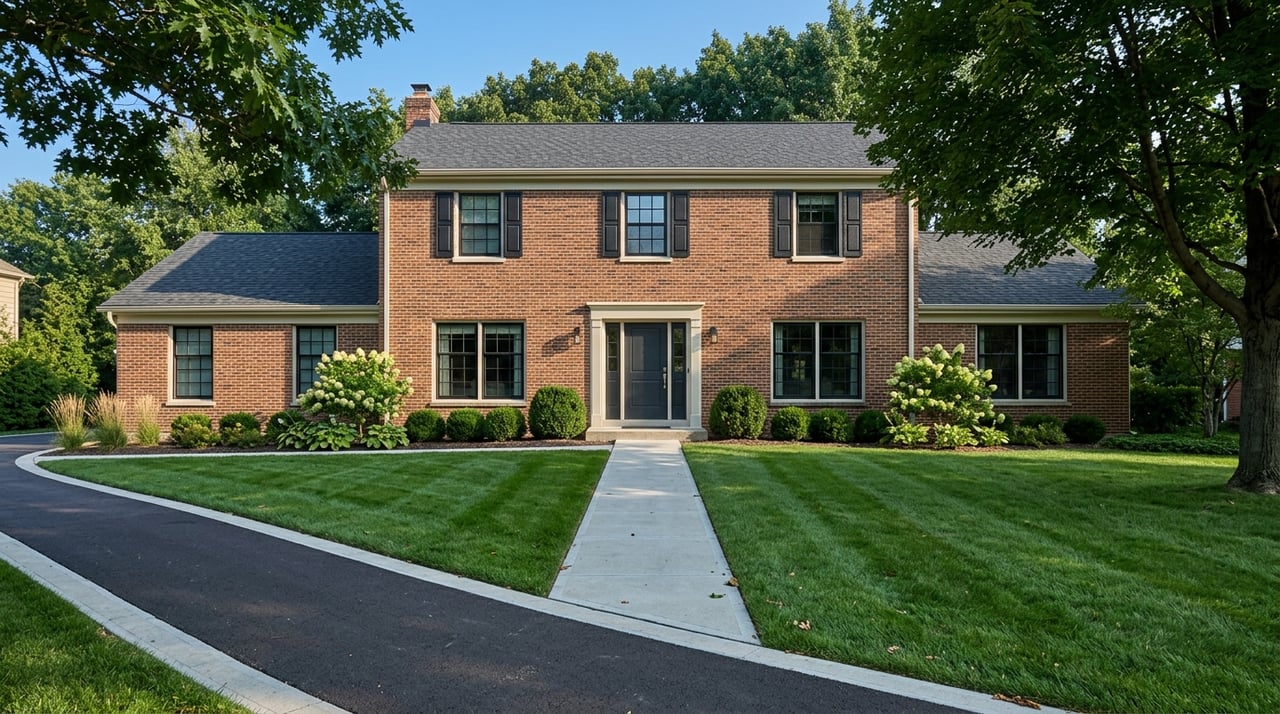
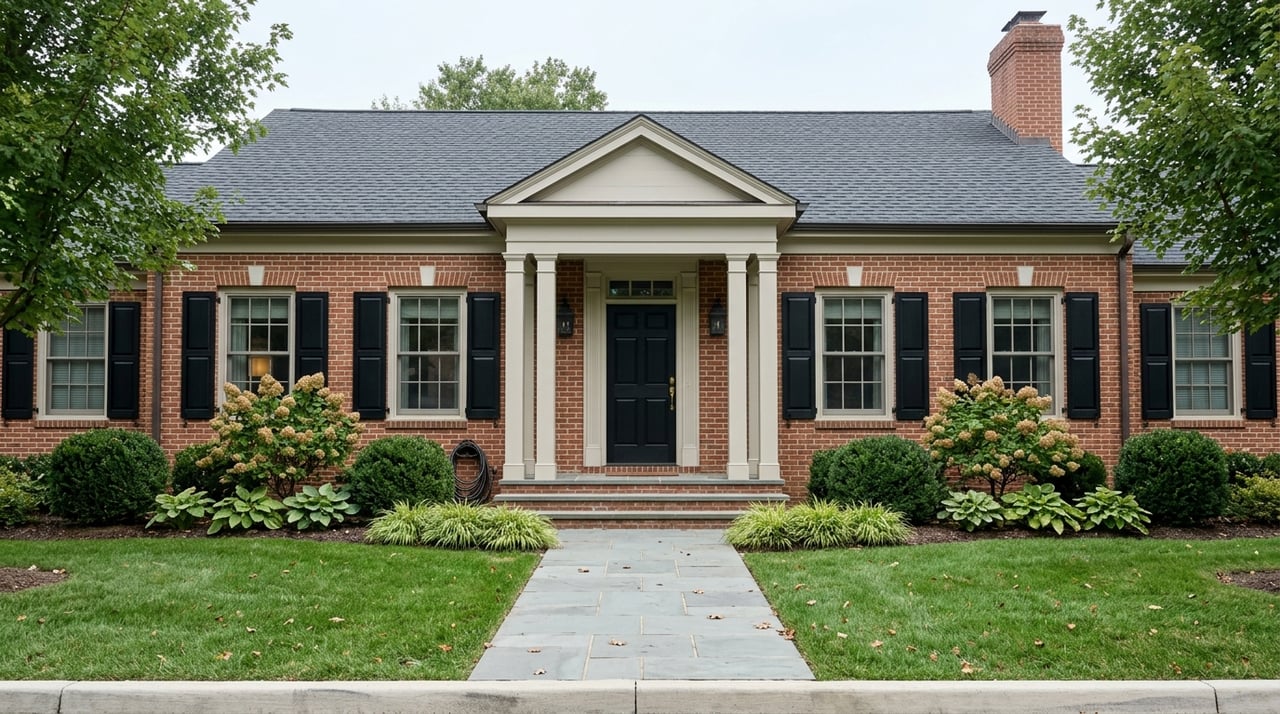
If Victorian homes tend to feel expressive and varied, Colonial-style homes usually feel ordered and easy to read from the street. Colonial Revival is one of Hinsdale’s core style families, and the village describes these homes as symmetrical, rectangular, classically detailed, and usually two stories tall.
Typical details include centered entries, columns or pilasters, dentils, and pedimented doors or windows. In the Robbins Park survey area alone, the village documented 32 Colonial Revival structures, showing how established this look is within Hinsdale’s architectural mix.
An important detail for buyers is that Colonial Revival in Hinsdale spans a wide date range. A home described this way may be an older property from the turn of the century or a much newer interpretation of the same design language.
Colonial Variations You May See
Several related styles show up in Hinsdale and are easy to recognize once you know the basics.
Dutch Colonial Revival
Dutch Colonial Revival homes are most recognizable for their gambrel roof. They are generally symmetrical and often include a classical entry portico, giving them a familiar traditional look with a slightly different roof profile.
American Foursquare
American Foursquare homes typically have a rectangular plan, hipped roof, one-story front porch, and a hipped dormer. They often feel practical and balanced, with a simple shape that still carries historic character.
Cape Cod
Cape Cod homes in Hinsdale are generally smaller 1½-story versions within the broader Colonial Revival family. You will often notice side-gabled roofs and front dormers, which create a compact and classic exterior.
What Colonial Style Can Mean for You
Colonial Revival and Dutch Colonial homes often feel more formal because the design centers on symmetry, rectangular plans, and clearly defined entries. If you like homes that feel visually balanced and easier to understand from the curb, this style family often delivers that.
Compared with more ornate Victorian homes, many Colonial-style exteriors also present a simpler facade. That can mean fewer decorative surfaces to maintain, though age, condition, and materials still vary from one house to another.
Prairie and Early 20th-Century Forms
Hinsdale’s design guidelines also identify Prairie Style among the high-style categories found in the village. While not every listing will use that label clearly, the visual cues are often recognizable.
Prairie and related early-20th-century forms typically show low, horizontal massing and broad eaves. Compared with the vertical emphasis of many Victorian homes or the symmetry of Colonial Revival, these homes often feel more grounded and understated from the street.
If you are scrolling listings, this style can be easy to miss if you are only looking for decorative details. Often, the giveaway is not ornament but the home’s overall proportion and horizontal profile.
Newer Luxury Homes and Rebuilds
One of the most important things to understand about Hinsdale architecture is that a historic-looking exterior does not always mean an original historic home. The village notes that the first teardowns appeared in the mid-1980s, and by 1997 and 2007, about 100 new homes a year were being built.
That period changed the look of the housing stock in a major way. In Hinsdale, newer homes are often designed to be visually compatible with the surrounding block rather than to follow one fixed style rule.
The village’s survey inventory helps explain what you may see in photos today. In areas like Robbins Park, later construction may be labeled Neo-Traditional, Contemporary, Split-Level, or other modern categories, including examples from the 1990s and 2000s.
What a Newer Home May Offer
A newer Hinsdale home may present a traditional exterior while offering a more contemporary interior layout. Based on the village’s emphasis on compatibility rather than one strict style list, that can mean a house looks historic from the curb but functions more like a modern home inside.
That combination is often appealing to buyers who want classic curb appeal with newer construction. It can also mean reduced age-related maintenance compared with a much older home, although location and design rules still matter.
Why Historic District Rules Matter
If you are considering a home in or near Robbins Park or a designated landmark property, exterior changes may involve added review. The village’s 2025 Certificate of Appropriateness packet says a certificate is required for exterior changes to designated landmarks and for demolition, removal, relocation, or new construction of residences in the Robbins Park Historic District.
The same packet says new residences in Robbins Park must go through a preliminary review and design review meeting before a formal application. For designated landmarks, decisions are binding, while for other properties in Robbins Park they are advisory.
For buyers, that matters because renovation flexibility may differ depending on the property. For sellers, it can also shape how a home’s design context is explained and marketed.
A Quick Guide to Reading Listing Photos
When you are comparing Hinsdale homes online, a few visual cues can help you read a property faster:
- Asymmetrical facade, tower, wraparound porch, mixed materials often points to Queen Anne or another Victorian-era high style.
- Symmetrical front, centered entry, columns or pilasters often signals Colonial Revival.
- Gambrel roof is a strong clue for Dutch Colonial Revival.
- Low horizontal massing and broad eaves may suggest Prairie Style or a related early-20th-century form.
- Historic-looking exterior with newer construction cues may indicate a Neo-Traditional home or a later rebuild.
These details can help you look past broad listing language and better understand what kind of house you are really seeing.
What This Means for Buyers and Sellers
For buyers, architectural style is more than curb appeal. It can affect how a home feels, how much exterior maintenance you may expect, and whether the house is likely to be an original historic property or a newer build with traditional styling.
For sellers, style matters because buyers react quickly to visual identity. A home with clear architectural character often benefits from marketing that names the style accurately, highlights the right exterior features, and sets realistic expectations about layout and condition.
This is where local market knowledge matters. In a place like Hinsdale, where original historic homes, later interpretations, and newer rebuilds can sit on the same block, understanding style helps you price, position, and evaluate a property with more confidence.
If you are weighing a purchase, planning a sale, or trying to make sense of how a home’s design affects value and buyer appeal, Scott Heichert brings an appraiser’s eye and a local broker’s perspective to help you move confidently.
FAQs
What architectural styles are most common in Hinsdale homes?
- Hinsdale features a mix of styles rather than one dominant look, including Queen Anne, Colonial Revival, Dutch Colonial Revival, American Foursquare, Cape Cod, Prairie Style, and newer Neo-Traditional homes, according to village design guidelines and survey work.
What does Victorian usually mean in a Hinsdale real estate listing?
- In Hinsdale, Victorian is often used as a broad label that overlaps with Queen Anne and other late-19th-century styles, so it is useful but not always precise.
How can you identify a Colonial Revival home in Hinsdale?
- A Colonial Revival home in Hinsdale often has a symmetrical front, centered entry, rectangular shape, and classical details such as columns, pilasters, dentils, or pedimented openings.
Are newer Hinsdale homes built in historic styles?
- Many newer Hinsdale homes are designed to be visually compatible with nearby houses, so a home may look historic from the outside while actually being a newer build or rebuild.
Do historic district rules affect Hinsdale homes?
- Yes. In designated landmark properties and in the Robbins Park Historic District, certain exterior changes, demolition, relocation, and new construction may require review under the village’s Certificate of Appropriateness process.